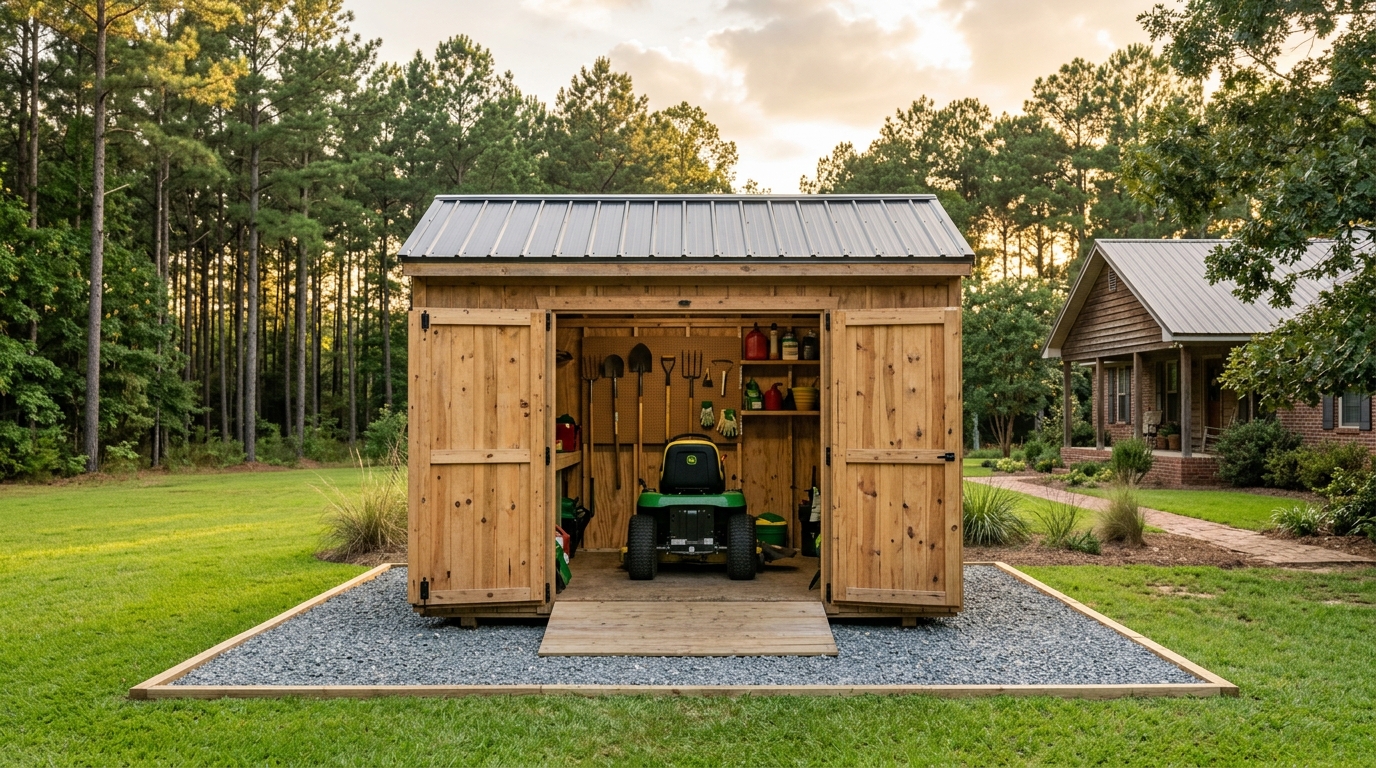
You open the shed doors for the first time in a few weeks and the air smells stale. You reach for the bag of grass seed and find a neat hole chewed through the bottom corner, with a trail of seed leading behind the mower. Neither one means something is wrong with the building. Moisture and mice go wherever they are comfortable, and a quiet shed full of stored gear is very comfortable.
Both problems start in the same places, so the same habits fix them. A few minutes each season keeps a Cotton State Barns shed dry and keeps the things inside it in good shape.
The Cotton State Barns warranty covers how the shed is built and the materials it is built with. It does not cover damage from weather, moisture, mold, pests, or ground that settles. That is why a few minutes of upkeep each season matters. These habits protect the parts of your shed that only you can protect.
Why Moisture and Pests Show Up Together
Mice, insects, and other critters look for three things: shelter, food, and water. A shed already provides the shelter. Anything edible stored on the floor supplies the food, and dampness that builds up inside supplies the water.
Damp air causes trouble of its own. Camping chairs and tarps pick up mildew, cardboard boxes go soft, and tools start to rust. Keep the inside of the shed dry, and most pest problems never get started.
Start Outside: Keep Water Moving Away
Most moisture problems begin outside the shed. The best time to spot them is right after a heavy rain, so grab a jacket and walk around the building. Look for:
- Standing water. Puddles that sit against the base of the shed for hours mean water is not draining away. A gravel border or a small adjustment to the grade can redirect it.
- Downspouts aimed at the shed. Water from the house roof or a neighboring building should drain away from the shed, not toward it.
- Sprinklers hitting the walls. Adjust any sprinkler heads that spray the siding or doors.
- Tall grass and plants against the walls. Trim back grass, weeds, and shrubs so air can move around the base. Plants that touch the siding hold moisture against it and give insects an easy bridge inside.
- Firewood and debris piles. Stack firewood, lumber, and yard waste away from the shed. These piles are favorite homes for mice and insects, and they keep the ground beside the shed damp.
If the shed sits on a pad that has started to settle and the building is no longer level, [submit a repair request](https://cottonstatebarns.com/blog/repair-request-warranty-claim) before trying to fix it yourself. The warranty does not cover settling caused by ground conditions, so there is a fee to re-level the building. The repair team can explain the cost. An uneven base can affect how the doors close and how water drains.
Let the Shed Breathe
A closed shed on a warm day can trap humid air, and when the temperature drops overnight, that moisture settles on cool surfaces as condensation. Airflow is the simplest way to prevent it.
- Use the vents. If your shed has vents, keep them clear of stored items, leaves, and cobwebs.
- Open the doors on dry days. A few hours with the doors open on a breezy, low-humidity day lets damp air escape.
- Do not wrap stored items in plastic sheeting. Plastic traps moisture against whatever it covers. Breathable covers or lidded bins work better.
- Try moisture absorbers. Disposable moisture absorber tubs, sold at most hardware stores, pull extra humidity from the air without needing power. Place one or two in corners and replace them when they fill.
If you notice drips on the underside of the roof on cool mornings, that is usually condensation rather than a leak. Better airflow often solves it. If water appears after rain no matter the temperature and you think the roof or walls are leaking, submit a repair request.
Store Smart: Keep Things Off the Floor
Look at your shed floor. If most of what you own is sitting on it, start here.
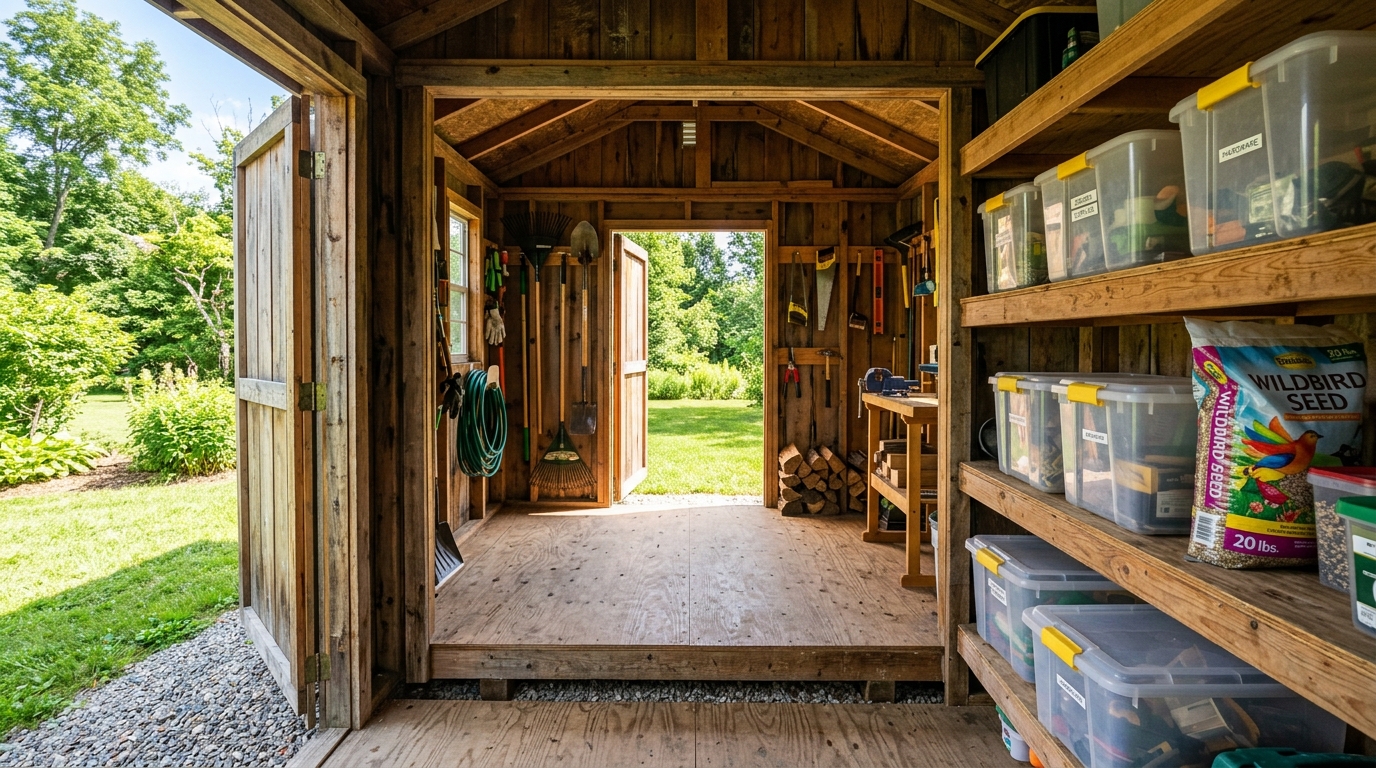
- Use shelves, hooks, and wall racks. Getting items off the floor improves airflow, keeps them away from any moisture near the floor, and removes hiding spots for pests.
- Put equipment away dry. Let a mower or trimmer cool down and dry off before storing it, and wipe down wet tools before hanging them up.
- Swap cardboard for bins. Cardboard absorbs moisture and is a favorite nesting material for mice. Plastic or metal bins with tight lids protect what is inside.
- Leave a little space around the walls. A few inches between stored items and the walls helps air circulate and makes it easier to spot problems early.
Seal the Gaps Pests Use to Get In
A mouse can squeeze through a gap about a quarter inch wide, roughly the width of a pencil. Insects need even less room. Twice a year, check the places where pests most often find a way in.
- Door bottoms and edges. Look for daylight around closed doors. Weatherstripping or a door sweep closes the gap.
- Corners and trim. Check where walls meet the floor and where trim pieces meet each other.
- Openings around anything added after delivery. Gaps around wiring, shelving brackets, or other add-ons are common entry points.
Fill small gaps with steel wool or hardware cloth. Foam alone will not stop a determined mouse, because rodents chew right through it. Before you cut, drill, or attach anything to the building, read the warranty terms.
Keep Food and Seed Out of Reach
To a mouse, a bag of birdseed on the shed floor is a pantry with the door left open. The same goes for grass seed, pet food, and garden bulbs. Pour them into metal or heavy plastic containers with tight lids, keep them on a shelf, and sweep up spills the same day.
For mice that have already moved in, traps are a safer first choice than poison, especially if children or pets spend time near the shed. If you do use bait, follow the label exactly and place it where only pests can reach it.
A Season-by-Season Shed Checklist
Spring
- Open the doors and vents on a dry day to air the shed out after winter.
- Look for signs of mice, such as droppings, chewed materials, or nesting.
- Walk the outside after a heavy rain to check drainage.
Summer
- Trim grass and plants back from the walls.
- Watch for wasp and hornet nests under eaves and inside corners.
- Use moisture absorbers during humid stretches.
Fall
- Clear leaves from around the base and away from vents.
- Seal any gaps before cold weather sends mice looking for shelter.
- Clean and dry mowers and garden tools before storing them for the season.
Winter
- Clear heavy snow and ice from around the doors and base.
- Check stored items now and then for dampness or signs of pests.
- Keep a path clear so you can reach the shed when you need it.
When to Submit a Repair Request
If you think a problem comes from how the shed was built or the materials used, such as a roof leak or a door that sticks on a building that is still level, submit a repair request on the Cotton State Barns website. The repair team will review it and let you know whether the warranty covers it. Damage caused by weather, moisture, mold, pests, or settling ground is not covered, and repairs for those problems come with a fee.
Planning to add vents, insulation, wiring, or other changes? Read the warranty terms on that same page first, because changes made to the building after delivery can affect your warranty. If your shed is on a rent-to-own agreement, check with the rent-to-own provider before making changes as well.
Frequently Asked Questions
How often should I check my shed for moisture and pests?
A quick look once a month is enough for most sheds, with a more thorough check each spring and fall. Pests and moisture are easiest to handle when they are caught early.
Is condensation inside a shed normal?
Some condensation can happen when warm, humid air meets a cool surface, especially on cool mornings. More airflow usually solves it. Water that shows up after rain, regardless of temperature, is different. If you think the roof or walls are leaking, submit a repair request so the repair team can review
What is the best way to store grass seed and birdseed in a shed?
Use metal or heavy plastic containers with tight lids, and keep them on a shelf rather than the floor. Paper bags on the floor are the first thing mice find.
Should I keep my shed doors open to air it out?
Opening the doors for a few hours on a dry, breezy day helps release damp air. Avoid leaving them open overnight or in wet weather, when moisture and pests can get in more easily.
Can I add vents to my shed?
Possibly, but read the warranty terms first. Changes made to the building after delivery can affect your warranty, so it is worth knowing the rules before you cut any openings.
None of this takes a weekend. A walk around the shed after a storm, a few shelves, and a couple of sealed bins will handle most of it. The next time you open the doors, the only thing waiting for you should be your gear. To find the right building for your property, find a dealer (https://cottonstatebarns.com/dealers) near you or design your own in the 3D Builder(https://cottonstatebarns.com/builder).
Randi Sherman
Randi Sherman is a content strategist on the Cotton State Barns team. She writes the buyer guides and advice articles, turning questions about sizes, delivery, site prep, and payment options into clear, practical answers. Her goal is to help shoppers compare their options and buy with confidence.