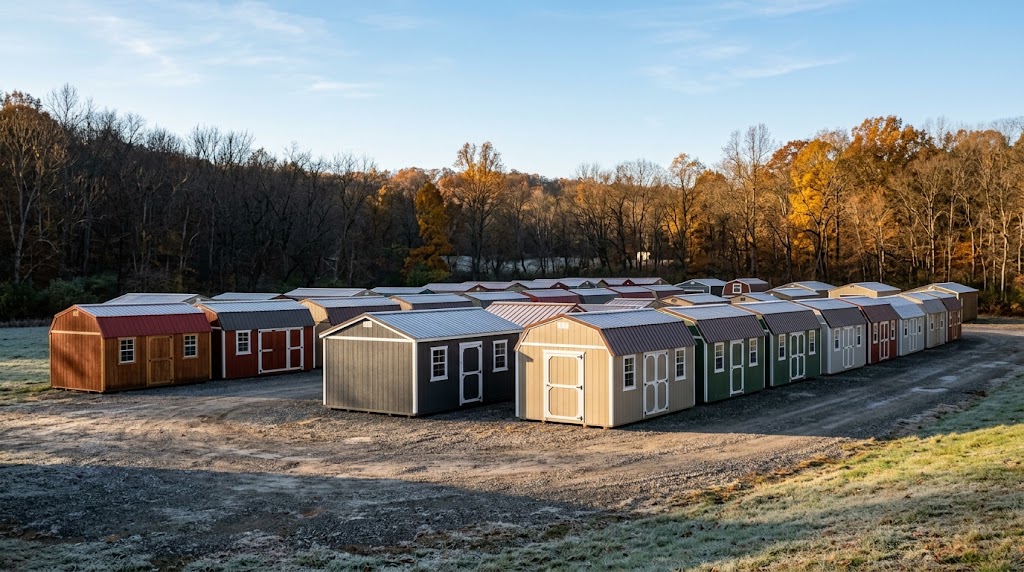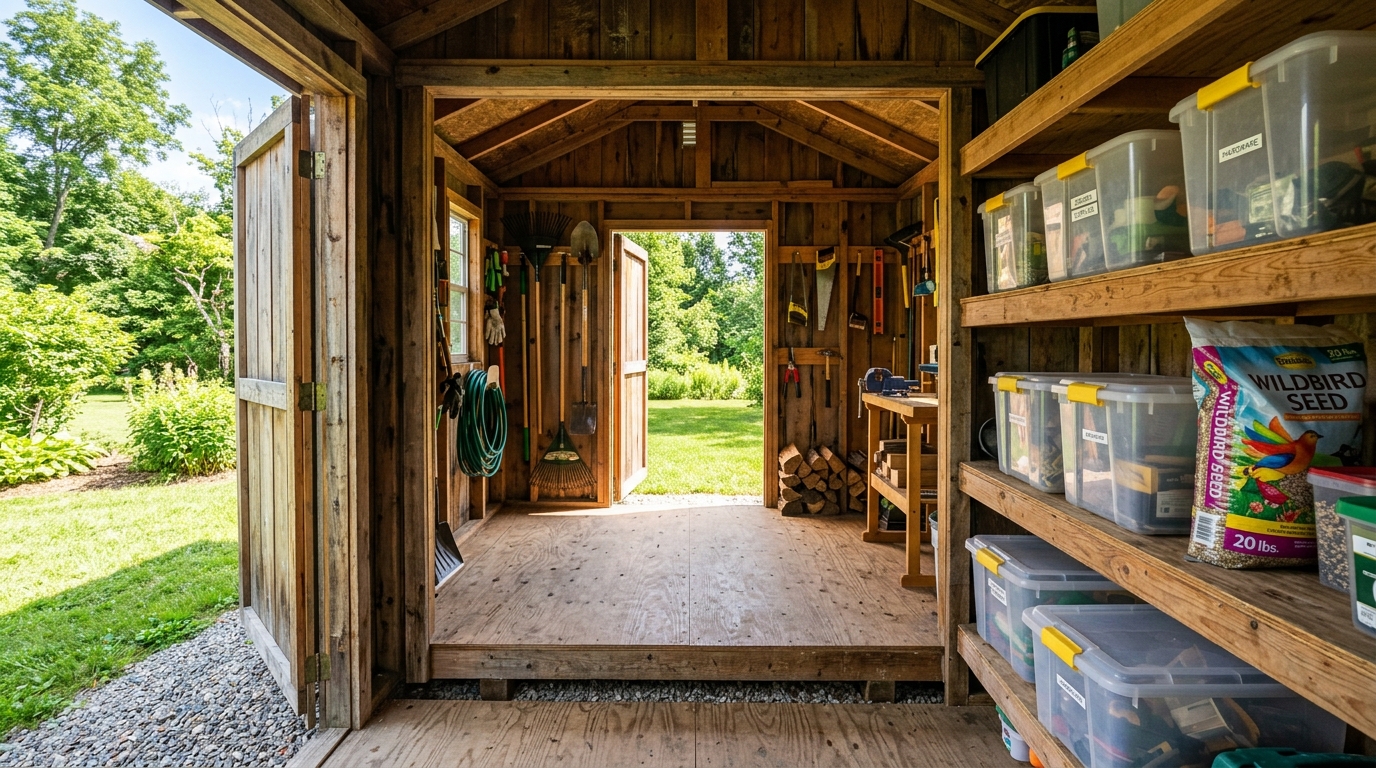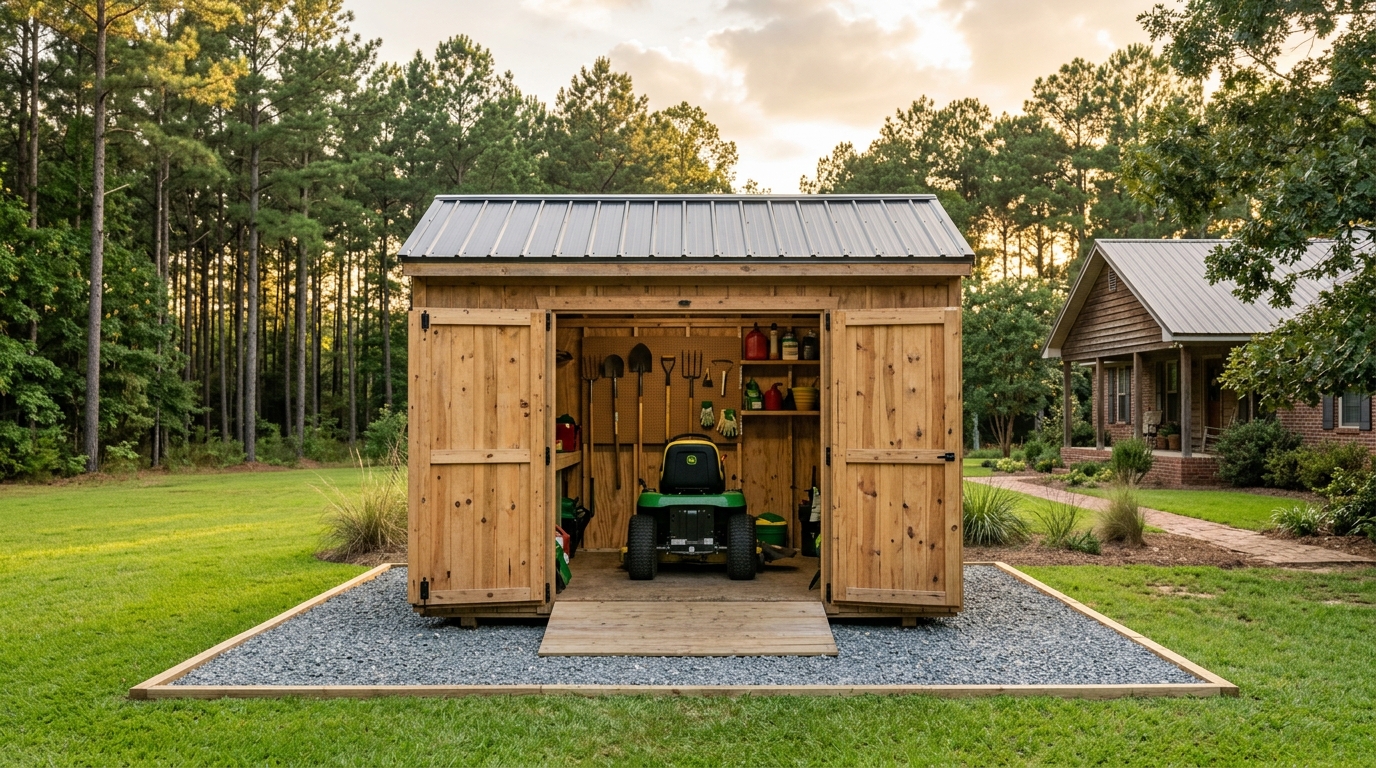
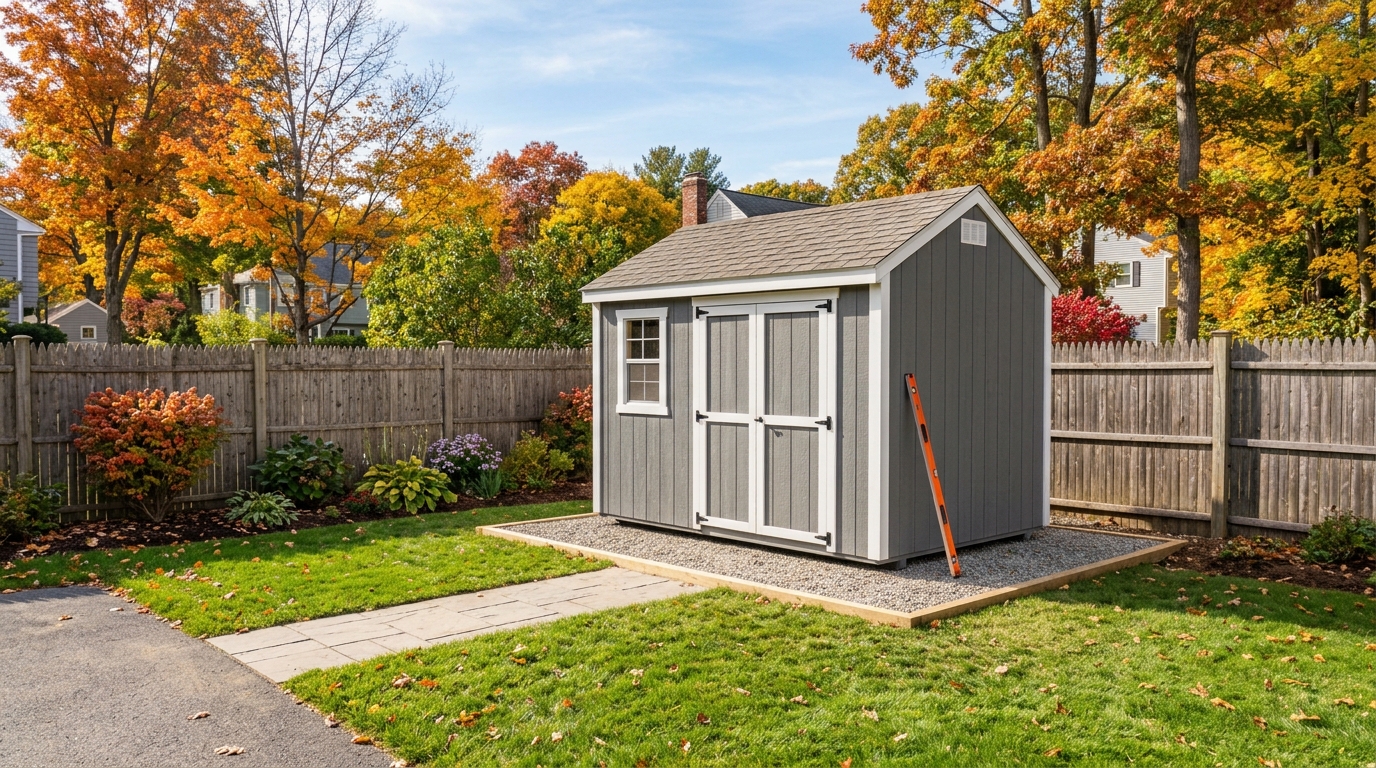
Delivery day moves fast. A truck pulls up with your new building on a tilt-bed trailer, the driver unloads a small machine called a mule, and before long your shed is sitting right where you wanted it.
What makes that go smoothly happens before the truck ever turns into your driveway. A little planning on your end saves a second trip and keeps the shed sitting level for years.
Quick Answer
To prepare your yard for shed delivery, pick a spot that is close to level and stays dry, check permits and setbacks with your local zoning office, decide what the shed will sit on, and clear a path wide and tall enough for a truck, trailer, and mule. Have everything ready a day or two before delivery. Cotton State Barns delivers and sets up your building (free if you are within 50 miles of the dealer nearest you, with an added charge for longer distances).
Start With a Permit Check
Before you order, call your local zoning office. Permit rules vary from one county or town to the next, and so do setbacks, which set how close a shed can sit to your property lines, your house, and other buildings. If you have a homeowners association, check its rules too.
Permits are the buyer's responsibility, but you do not have to figure out the paperwork alone. Your dealer can provide a building spec sheet to include with a permit application.
Pick the Right Spot
Walk your yard and look for a spot that checks these boxes:
- It is fairly level, with no steep slope.
- Water does not pool there after a heavy rain.
- There is room to walk all the way around the shed, so you can reach the siding for painting and caulking later.
- The doors will face the way you want to use them, toward the driveway for a mower or toward the garden for tools.
Low spots are the ones to avoid. A shed that sits in standing water stays damp, and damp sheds attract mold and pests. Our article on keeping moisture and pests out of your shed covers what to look for.
Decide What the Shed Will Sit On
Your shed can go in one of four places:
- Right on the ground. The building rests on its runners, and nothing else is needed.
- Landscape blocks set under the runners.
- A gravel pad, which lets rainwater drain away from the floor.
- A concrete pad, which gives you a firm, flat base.
Each one works. A gravel or concrete pad takes more time and money up front, so finish it before delivery day if you go that route.
How Level Does the Site Need to Be?
It does not have to be perfect. The crew brings wooden leveling blocks at no charge as long as your site is no more than one foot out of level in any direction. If the ground slopes more than that, you will need to provide concrete blocks for leveling.
A quick way to check is to lay a long, straight board across the spot and set a level on top. Check side to side and front to back. The delivery page has the full details.
Clear a Path for the Truck
This step is the easiest to overlook. The truck, trailer, and mule all need a way to reach your site, so walk the route from the street to the spot and look for anything in the way.
- Measure gates and any gaps between trees, fences, and buildings.
- Look up for low branches and wires.
- Trim branches and take down fence panels ahead of time. The crew does not remove obstacles.
- Mark septic tanks, sprinkler heads, and buried lines so the driver can steer around them.
- Move cars, trailers, and outdoor furniture out of the way.
If the ground is soft from a lot of rain, the truck may not be able to cross it until it dries. If you are paying through rent-to-own, keep in mind that the route cannot cross a neighbor's property.
Not sure the truck will fit? Talk to your driver before delivery day.
What Happens on Delivery Day
Your driver will call ahead to confirm the site is ready. When the truck arrives, show the driver where you want the shed and which way the doors should face. The driver backs the trailer in, and the mule sets the building on your prepared site. The crew levels it, and you are ready to start moving things in.
Delivery and setup are free within 50 miles of the dealer nearest you. If you live farther away, Cotton State Barns still delivers for an added charge based on distance.
If Your Site Is Not Ready
If your site will not be ready in time, you can reschedule at no charge with about 48 hours' notice. A same-day change may come with a trip fee, so it pays to have everything finished a day or two early.
Shed Delivery Checklist
- Permits and setbacks checked with your local zoning office
- Spot chosen, close to level, with no standing water
- Base ready, whether that is bare ground, blocks, gravel, or concrete
- Path clear from the street to the site, with branches trimmed
- Septic tank, sprinklers, and buried lines marked
- Cars and outdoor furniture moved
- Phone on for the driver's call
Frequently Asked Questions
Do I need to level my yard before shed delivery?
Not perfectly. The crew provides wooden leveling blocks at no charge if your site is no more than one foot out of level in any direction. Beyond that, you will need to supply concrete blocks.
Can a shed sit directly on the ground?
Yes. The shed rests on its runners. You can also set it on landscape blocks, a gravel pad, or a concrete pad.
How much does shed delivery cost?
Delivery and setup are free within 50 miles of the dealer nearest you. Cotton State Barns also delivers farther than that for an added charge based on distance.
What if the truck cannot reach my backyard?
Every site has to be reachable by the truck, trailer, and mule. If you are unsure, talk to your driver before delivery day.
Do I need a permit for a shed?
It depends on where you live. Check with your local zoning office before you order. Your dealer can provide a spec sheet for your permit application.
Once the spot is ready and the path is clear, the rest is up to the delivery crew. Find a dealer near you, browse in-stock buildings, or design your own in the 3D Builder.
Randi Sherman
Randi Sherman is a content strategist on the Cotton State Barns team. She writes the buyer guides and advice articles, turning questions about sizes, delivery, site prep, and payment options into clear, practical answers. Her goal is to help shoppers compare their options and buy with confidence.